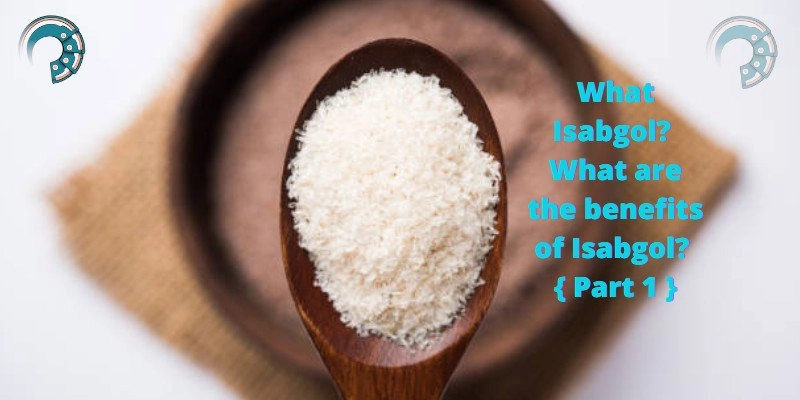
What is Isabgol? What are the benefits of Isabgol? { Part 1 }
Isabgol :
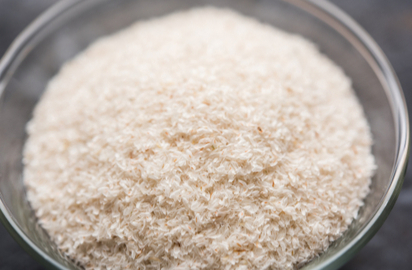
Isabgol, popularly known as psyllium husk is obtained from the seeds of the plant Plantago ovata. It is an oily and gluey herb with a sweet, astringent taste and has a cooling effect on the body. Being a powerful herb, it promotes digestive health and works as a natural laxative. The name originated from the Sanskrit words as and ghol which means horse’s ear, as the seed’s shape resembles a horse’s ear. It is also clad by other names such as Ispaghula, Isabgol, Ashwakarna, Psyllium, Flea seed, and Sand Plantain.
Isabgol, native to India and Mediterranean countries is an annual herb that grows up to 40 cm in height. The leaves are linear with several small white flowers and seeds are enclosed in capsules which open after full maturity. India is the largest producer and exporter of this wonder herb. The active ingredient Metamucil is the key element used in making dietary supplement which helps to relieve constipation. It is also a commonly used ingredient in the production of breakfast cereals which aids to lower cholesterol levels and promote gut health.
Isabgol goes by several vernacular names like Sheetabeeja, Ashwakarna in Sanskrit, Isabgul in Hindi, Isafghol in Gujarati, Isofgolu in Kannada, Ishagula in Telugu, and Iskolvirain in Tamil. Ayurvedic medicine strongly vouches for this wonder plant owing to is natural coolant, laxative, and diuretic properties that render a host of healing health incentives.
Properties of Isabgol :

Researchers from the past decade have shown interest in this naturally occurring swellable biomaterial herb. It has been traditionally used as medicine and is now being utilized in the pharmaceutical industry due to the following properties.
- It may have beneficial properties for the cardiovascular system
- It may have bulk-forming properties
- It may show laxative activity
- It may have demulcent properties
- Habitual constipation
Benefits of Isabgol :
The husk extracted from the Isabgol seeds is used in pharmaceutical preparations. When consumed, it attracts water as it gets into the digestive tract and becomes a gel-like substance. The high fibre content slows down digestion and allows the body to absorb more nutrients from food. It helps with a wide range of health issues and has many benefits.
- Powerful Prebiotic
- Isabgol Use for Constipation
- Lowers Cholesterol
Powerful Prebiotic :
Prebiotics are a source of food and nutrition for the gut’s healthy bacteria, they are indigestible carbs. Isabgol is known to possess potent prebiotic properties and produces short-chain fatty acids- butyrate. A healthy group of good bacteria in the digestive system is vital for strengthening immune health and the gut microbiome. Having isabgol supports the body in combat infection, reducing inflammation and optimizing overall health.
Isabgol Use for Constipation :

Isabgol is known for its laxative effects. The fiber content of Isabgol helps manage constipation. It has both soluble and insoluble fibers that expand in the stomach. They absorb and retain water that adds bulk to the stools. It softens the stool and makes it easy to pass out. Isabgol also stimulates contractions in the intestine which makes stool expulsion easy. Isabgol with milk at night benefits relieving constipation.
How to take Isabgol for constipation? Mix 1-2 teaspoons of husk powder in a glass of warm milk. Have this right before going to bed at night to get relief from constipation.
Lowers Cholesterol :
Isabgol binds to fats and bile acids which allows the excretion of cholesterol from the body. Isabgol increases bile acids synthesis and lowers bad cholesterol (LDL) and remarkably increases good cholesterol (HDL). Moreover, it also controls further absorption of cholesterol and triglycerides from the food and reduces the risk of heart disease.